Emailing: Best Practices to Avoid the Spam Folder
Introduction
In a world where every business is competing for audience attention, emailing remains one of the most powerful and cost-effective marketing tools.
However, even the best campaigns can fail if your messages end up in the spam folder.
Between increasingly strict spam filters, technical errors, and poorly optimized content, deliverability has become a true strategic challenge.
So, how can you ensure that your emails actually reach your recipients’ inboxes?
Here are the best practices to help you avoid spam and maximize your campaign’s impact.
1. Understand Why Your Emails End Up in Spam
Email providers like Gmail, Outlook, and Yahoo use advanced filters to protect their users. These filters analyze every message based on several key factors:
- The reputation of your domain and IP address
- The content of your message (suspicious words, excessive links or images)
- The behavior of your recipients (opens, clicks, complaints)
Just one wrong signal can send your message straight to spam.
👉 Pro tip: Monitor your sender score with tools like Postmark, SenderScore, or Mail-Tester.
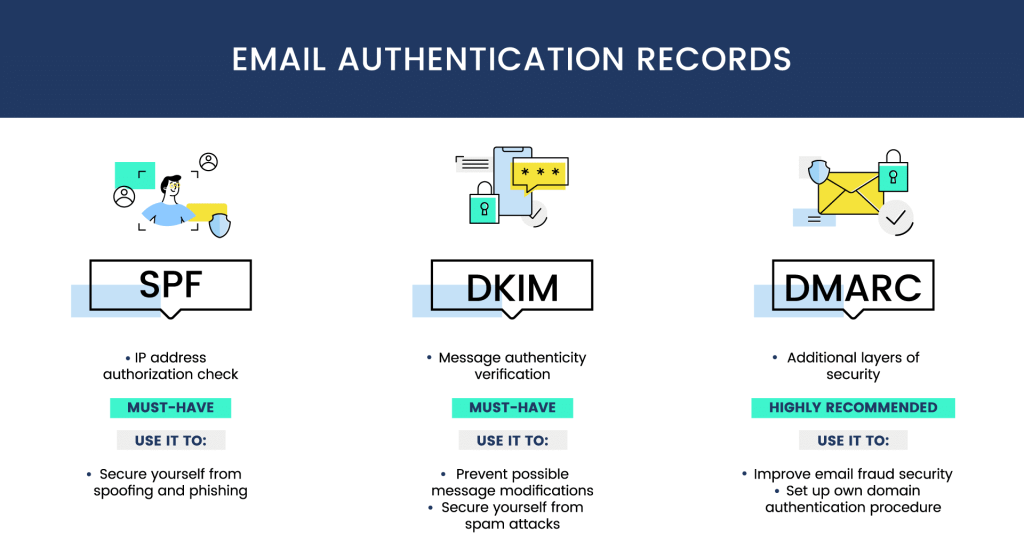
2. Authenticate Your Domain: SPF, DKIM, and DMARC
Domain authentication is the foundation of good deliverability.
- SPF (Sender Policy Framework): Authorizes specific servers to send emails on behalf of your domain.
- DKIM (DomainKeys Identified Mail): Digitally signs your messages to prove their authenticity.
- DMARC (Domain-based Message Authentication, Reporting, and Conformance): Combines SPF and DKIM for enhanced protection.
By setting up these protocols, you show providers that your emails are legitimate and secure — significantly reducing the risk of being flagged as spam.
💡 Example: A properly authenticated domain can improve deliverability by up to 30%, according to HubSpot.
3. Craft Strong Subject Lines and Content
A great subject line is half the success of an email.
Avoid aggressive or misleading phrases like:
❌ “Amazing offer!!!” / “Win €1000 now!” / “Click here fast!”
Instead, aim for a clear, honest, and engaging tone:
✅ “Your free guide to improving web performance”
✅ “3 simple tips to boost your online visibility”
When it comes to content:
- Personalize messages with the recipient’s name or company.
- Keep paragraphs short and easy to scan.
- Use optimized images with alt text for accessibility.
- Always include a clear call to action (CTA) at the end.
4. Maintain a Clean Contact List
Good deliverability starts with a healthy database.
🚫 Never buy email lists — they harm your reputation.
✅ Use double opt-in to ensure subscribers truly want your messages.
✅ Regularly remove inactive or invalid contacts.
✅ Segment your lists by interests, behavior, or customer journey stage.
A clean list = better open rates, fewer unsubscribes, and a stronger brand image.
5. Optimize Sending Frequency and Timing
Too many emails = guaranteed unsubscribes.
Too few = your audience forgets about you.
You need to find the right balance.
- Analyze performance from previous campaigns.
- Test different sending times (morning, lunch break, evening).
- Adjust frequency based on your audience’s habits.
💡 Example: A weekly newsletter focused on valuable insights is usually better received than a series of aggressive sales emails.
Recommended tools for emailing : Brevo (Sendinblue), Mailchimp, HubSpot, or MailerLite.
6. Monitor Deliverability and User Feedback
A successful email strategy depends on continuous measurement.
Track your key performance indicators:
- Open rate
- Click-through rate
- Unsubscribe rate
- Spam complaint rate
Test your emails before sending them to your full list using tools like MailTester, GlockApps, or Litmus.
And most importantly, adjust based on results: a sudden drop in open rates is a red flag.
7. DevUps: Your Partner for Email Marketing Excellence
At DevUps, we help businesses design high-performing email campaigns that comply with technical standards and GDPR regulations.
Our services include:
- Configuration of SPF, DKIM, and DMARC protocols
- Implementation of automation strategies (segmentation, nurturing, lead scoring)
- Creation of high-value content that strengthens deliverability and conversion
🎯 Our goal: ensure your emails reach your customers — not their spam folder.
👉 Also read: Using Jira to track project progress
👉 Related article: Optimize your site for search engines (SEO)
Conclusion
Avoiding spam is primarily a matter of discipline and precision.
By combining solid technical hygiene (SPF, DKIM, DMARC) with relevant, high-quality content, you’ll improve your deliverability, reputation, and overall marketing performance.
At DevUps, we believe in a responsible, authentic, and value-driven email strategy.
📩 Contact us today to audit your email marketing strategy and ensure your messages reach the right inbox — every time.